Concrete cladding: precast panels, board-formed and polished
The families
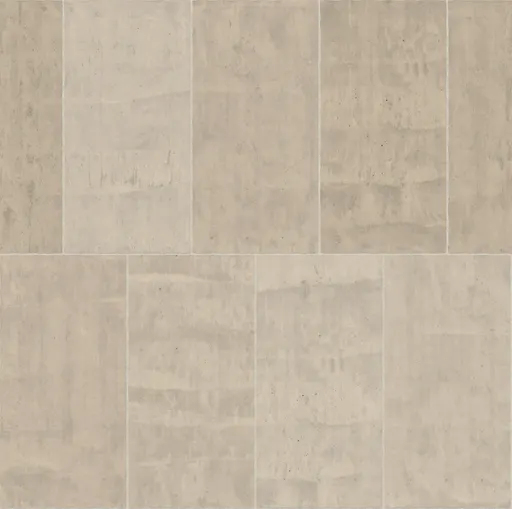
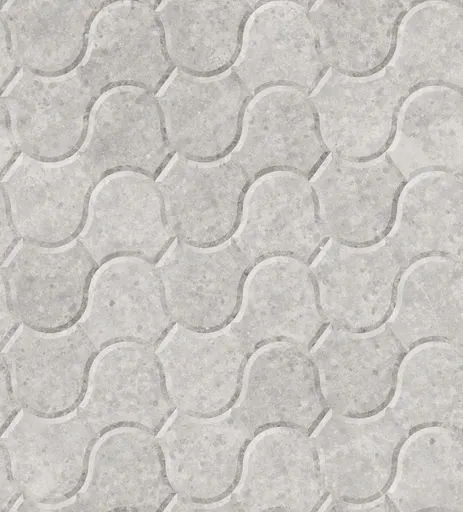
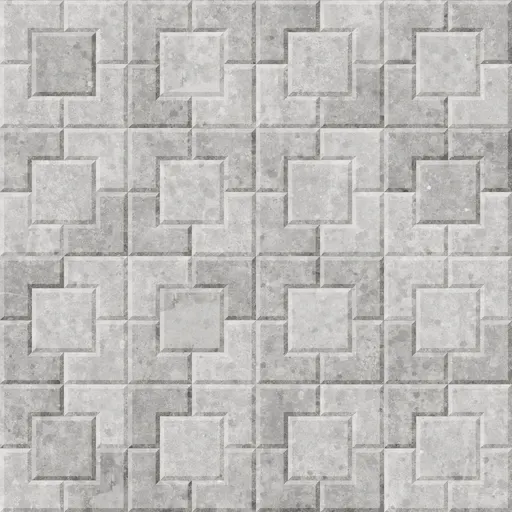
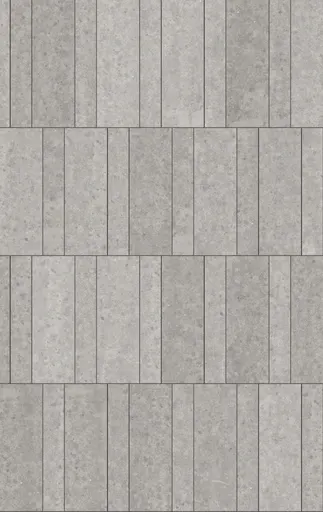
Precast panels — smooth plates with a visible joint grid. Board-formed — the timber imprint left by formwork, board lines included. Fair-faced — controlled, uniform grey with subtle mottling. Bush-hammered and exposed aggregate — rougher surfaces that show their stones. Polished concrete — dense and reflective, marble-like. Microcement — a thin, seamless decorative layer for walls and floors.
Joints are the design
A concrete façade reads through its joints: the panel grid, the formwork lines, the pour marks. Textures carry the surface — draw the joints at the real module (panels commonly run 1.2 to 3 m wide) so the elevation keeps its rhythm. See the sizes reference for typical formats.
Greys drift — check them in context
Concrete greys read warm or cool depending on the light and the neighbouring materials; a texture that looks neutral in isolation can look blue next to timber, or brown next to steel. Every page shows the measured repetition size so the surface pattern stays at true scale while you tune the tone.








Frequently asked questions
Are these concrete textures free for commercial use?
Yes — every texture on 360into is free for personal and commercial use, with no attribution required.
What is board-formed concrete?
Concrete cast against timber boards, leaving the grain and board lines as the finished surface — the pattern you see in many brutalist and modern walls, and in the library.
Are the textures seamless / tileable?
Most are designed to tile without a visible seam; the repeat preview on each page shows how edges join.
Precast or microcement for interiors?
Microcement reads seamless and thin — good for renovation and continuous walls; precast reads modular and sharp — good for structure and rhythm.